Should You Give Your Child Pocket Money?

Should you give your child pocket money?
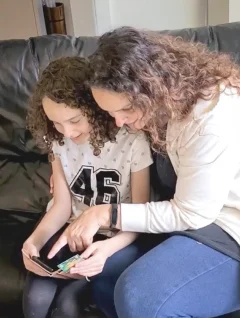
Yes. Giving children regular pocket money is one of the most effective ways to build real world money skills from a young age.
According to the 2025 Spriggy Economy Report, which analysed spending and saving data from 790,000 Aussie kids, the average child earned $50.07 per month in pocket money, an 11% increase from the previous year.1
The data shows that kids aren't just learning to save, they're dreaming bigger.
Spriggy's data found that 67% of all travel themed savings goals set by kids were for overseas trips.1
When children are given the tools to manage money, they quickly learn to set ambitious long term goals.
Regular pocket money teaches budgeting, delayed gratification, and the value of saving toward something meaningful.
How does pocket money help children learn about money?
A Harvard study suggested that children learn most effectively through hands-on experience.2
So when kids manage their own pocket money, they are actively developing practical habits around budgeting, saving, and spending that stay with them into adulthood.
Regular pocket money paid weekly or fortnightly on a consistent schedule teaches children that money is a limited resource.
They learn to make their money last between payments, weigh up spending decisions, and understand that once it's gone, it's gone until the next payday.
These are the same budgeting fundamentals that adults rely on every day.
Allowing children to make their own money decisions, including mistakes, helps them understand consequences in a low risk environment.
A child who spends all their pocket money on the first day and has nothing left for the rest of the week learns more about budgeting than any lecture could teach.
What age should you start giving your child pocket money?
Australian families start giving regular pocket money between ages four and six.3
However, there is no single right age as it depends on your child's readiness and how well they understand basic concepts like the difference between spending and saving.
Here are some signs your child may be ready:
They understand that you need money to buy things. When you're shopping together, they grasp that items have prices and money is exchanged at the checkout. You can test this on your next grocery run by asking them how you pay for everything before you leave the store.
They can count and do basic addition. They don't need to be a maths whiz, but understanding that $5 plus $5 equals $10 helps them manage a small amount of their own.
They understand the concept of waiting. If they can grasp that saving a little each week adds up to enough for something bigger, they're ready to start practising with real money.
They know money doesn't appear by magic. In a cashless world, children often think payments are invisible. If they understand that the family has a limited amount of money, they're ready for their own.
As a general guide, start with a small amount. A common approach in Australia is $1 per year of age per week, so a seven year old would get $7. Increase it gradually as your child gets older and takes on more responsibility.
Should pocket money be tied to chores?
Most parenting experts recommend a hybrid approach: a small base amount given unconditionally, with the option to earn extra through additional tasks. However, this is a personal family decision and different approaches work for different households.
Give a small base amount each week regardless, so your child always has something to manage and learn with.
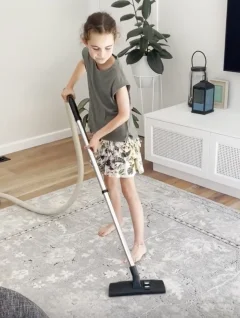
Then offer optional paid tasks on top, like washing the car, helping with yard work, or tidying shared spaces.
This way they learn both that contributing to the family is expected and that extra effort can be rewarded.
Whatever you choose, the key is to be clear and consistent. If pocket money is tied to chores, spell out exactly which tasks earn what amount. And follow through. If the work isn't done, the payment doesn't happen. That consistency is what builds the lesson.
How should you structure a pocket money system?
The most effective pocket money systems are consistent, simple, and age appropriate. Choose a set day each week to pay pocket money so your child learns to plan around a regular income, just as adults do with a salary.
Be consistent with timing and amount. Pay the same amount on the same day. This predictability helps children learn to budget and plan ahead.
Let them make mistakes. If they spend everything on day one, resist the urge to top them up. Running out of money before the next payment is one of the most powerful lessons in financial responsibility.
Increase responsibility with age. As your child grows, increase the amount but also expand what they're expected to cover, like bus fares, school snacks, or birthday gifts for friends.
Encourage saving goals. Help them set a target, whether it's a toy, a game, or something bigger, and track their progress together. The achievement of reaching a savings goal builds lasting financial confidence.
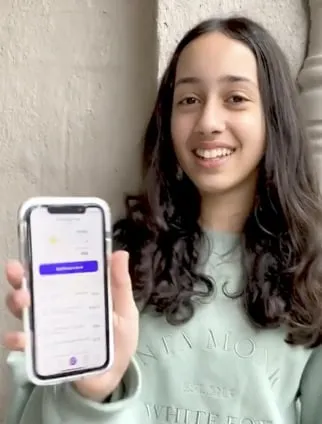
Consider going digital. In today's cashless world, digital pocket money tools help children learn how modern money actually works. They can see their balance, track their spending, and watch their savings grow in real time, which makes the learning experience much more tangible.
Closing Remarks
At the end of the day, pocket money isn't really about the money. It's about giving your child a safe space to make real decisions, learn from the outcomes, and build confidence with something that will be part of their life forever. The amount you give matters far less than the consistency you bring to it.
You don't need a perfect system. You just need to start. Pick an amount, pick a day, and let your child begin figuring it out. They'll make mistakes and maybe they'll spend too much on something silly. But that's exactly the point. Those small lessons now are what build the adults who manage money well later.
Pocket money gives them a chance to practise those decisions while the stakes are still low and you're still there to guide them.
Sources:
1. Spriggy Internal Data, number of users by user type, total pocket money earned, spent and saved by Spriggy kids in FY25. Based on confirmed active users as at 31 July 2025.
2. L. Deslauriers, L.S. McCarty, K. Miller, K. Callaghan, & G. Kestin, 'Measuring actual learning versus feeling of learning in response to being actively engaged in the classroom', Proc. Natl. Acad. Sci. U.S.A. 116 (39) 19251-19257, https://doi.org/10.1073/pnas.1821936116 (2019).
3. Commbank, 'Should you give kids pocket money?', https://www.commbank.com.au/articles/youth-student-banking/should-you-give-kids-pocket-money.html
The information in this post is provided for general information only. The information does not take into consideration your or anyone else's objectives, needs or financial situation and does not constitute financial advice or a recommendation of any kind. Before acting on any information consider its appropriateness and, where appropriate, seek professional advice. Although every effort has been made to verify the accuracy of the information as at the date of publication, Spriggy its officers, employees and agents disclaim all liability (except for any liability which by law cannot be excluded), for any error, inaccuracy, or omission from the information for any reason, including due to the passage of time, or any loss or damage suffered by any person directly or indirectly through relying on this information.